|
 USDA Wildlife Services ITN
#2803161
USDA Wildlife Services ITN
#2803161
10/30/11 09:54 AM
10/30/11 09:54 AM
|
Joined: Feb 2011
USA
Wildlife2
 OP
OP
trapper
|
OP
trapper
Joined: Feb 2011
USA
|
|
|
|
 Re: USDA Wildlife Services ITN
[Re: Wildlife2]
#2810034
Re: USDA Wildlife Services ITN
[Re: Wildlife2]
#2810034
11/03/11 12:29 PM
11/03/11 12:29 PM
|
Joined: Nov 2009
NH
sgs
trapper
|
trapper
Joined: Nov 2009
NH
|
|
|
|
Re: USDA Wildlife Services ITN
[Re: Out of work trap]
#2926611
01/04/12 01:55 AM
01/04/12 01:55 AM
|
Joined: Apr 2010
NM
HD_Wildlife
trapper
|
trapper
Joined: Apr 2010
NM
|
Well it's nice to see the propaganda machine at work!
. george, was simply stating that the post describing this as a new thing was inaccurate, is that propaganda?
|
|
|
Re: USDA Wildlife Services ITN
[Re: Wildlife2]
#2927019
01/04/12 11:59 AM
01/04/12 11:59 AM
|
Joined: Nov 2009
NH
sgs
trapper
|
trapper
Joined: Nov 2009
NH
|
the people who are paying for are the people getting hurt by it... Seeing that it is a totally voluntary program, how are they getting hurt?
|
|
|
Re: USDA Wildlife Services ITN
[Re: Out of work trap]
#2936518
01/09/12 02:16 PM
01/09/12 02:16 PM
|
Joined: Apr 2010
NM
HD_Wildlife
trapper
|
trapper
Joined: Apr 2010
NM
|
The USDA is even a villein in Hollywood now. Yes that's right The USDA is represented in a new movie "We Bot a Zoo " as the shifty bag guy. They say that the press and movies are a good representation of the times there made, and also the psyche of society, and of the people . USDA Veterinary Services who oversee animal health including livestock, zoos and research facilities to name a few and are the federal oversight for livestock disease. I just keep finding it hard to understand how these off topic posts that don't related to WS help the case? We bought a zoo? Really? Everyone in this fight should be sure they know which branch of USDA the posts they are writing are about.
|
|
|
Re: USDA Wildlife Services ITN
[Re: Wildlife2]
#2936717
01/09/12 04:31 PM
01/09/12 04:31 PM
|
Joined: Apr 2011
Boca Grande FL
Out of work trap
trapper
|
trapper
Joined: Apr 2011
Boca Grande FL
|
Yes Parker, it was Veterinary Services. You know that and I know that ,but all the people in the audience saw, in big letters on his truck and name badge was "USDA"
Now you know my history !, Here I am at the movies with my wife and 8 year old daughter. I just thought it to be Ironic. In a family movie the USDA is depicted as the Villein .
To tell you the truth. Mien and my wife's jaw dropped . And yes I did laugh out loud and and said " You Got to be Sh--ing me ,Hollywood is on them now.
PS - AR groups want all trapping and hunting ended, the govt. just helps them grab the most donor cash and hype!
This comment is why I stand by my statement! They are making all of us look like clowns. and the more fuel WS gives the AR's the closer we are to laws being pasted that will hurt the privet wildlife trappers!!!
Last edited by Out of work trap; 01/09/12 04:32 PM.
|
|
|
Re: USDA Wildlife Services ITN
[Re: Wildlife2]
#2973058
01/26/12 02:32 AM
01/26/12 02:32 AM
|
Joined: Dec 2006
/AZ
Vinke
trapper
|
trapper
Joined: Dec 2006
/AZ
|
pisses me of your training is only for airport personnel,,,,,,,,,,,,, ALMOST as bad as the usdaws,,,,,,,,,,,,!!!!!!@
Ant Man/ Marty 2028
Quote of the week ,,,,,,, "he looks simple".
|
|
|
Re: USDA Wildlife Services ITN
[Re: Paul Winkelmann]
#3115309
04/10/12 05:28 PM
04/10/12 05:28 PM
|
Joined: Apr 2010
NM
HD_Wildlife
trapper
|
trapper
Joined: Apr 2010
NM
|
Paul,
the 1080 and sodium cyanide folks have been after this as a target of the AR agenda for many many decades.
here would be my .02 for the record (had this discussion with some AR folks on another forum not long ago, so
fresh in my mind.
1) 1080 in the US is only put in livestock protection collars. this for those in the know means that you only kill
the predator that bites the neck of that animal. if there is a more specific method of knowing you got the "right guy"
outside of seeing the event happen and pulling the trigger, I haven't heard it. these collars are expensive which means
they aren't put out willy nilly all over the countryside.
2) the dose is meant to kill that animal attacking, not cursory scavengers, etc... which is what the AR groups draw upon
to say this is a bad and awful chemical.
3) moving on to the M-44's, not only can agents of this outfit use them, but licensed applicators including ranchers in many
western states can as well.
4) there are more than 20+ rules that govern the deployment of these devices, which when pulled by the coyote discharge
the dose of sodium cyanide killing the coyote often within steps of the device.
5) the problems with both? well, frankly most of the dead canines of the domestic variety were killed by trespassing hikers and folks
who walked right past the mandatory signage or better yet, tore down the signage and proceeded to watch their canine companion
die in front of them.
I love my dogs, both of which died a couple of years back of old age, cancer related things. Both had been caught in footholds once
while on the line in Michigan with us, and both if I trespassed and walked past the "danger" "peligro" signage could have been lost to
these tools.
The bottom line for me is that the collar with 1080 is a no brainer, it is specific to the animal depredating, something the antis rail over
when it comes to widespread predator control with traps, snares and aerial hunting.
M-44's, yep this could result in another non-target pull, but the guys after these target coyotes don't want to work more hours to get
the same critter, so they are targeting with specific baits and lures and setting on sign and where damage is occurring,
Hope that helps provide some background for anyone not knowledgeable or on the fence.
Not defending the agency here, just stating facts about the two toxicants in question.
Justin
|
|
|
Re: USDA Wildlife Services ITN
[Re: Paul Winkelmann]
#3115317
04/10/12 05:33 PM
04/10/12 05:33 PM
|
Joined: Apr 2010
NM
HD_Wildlife
trapper
|
trapper
Joined: Apr 2010
NM
|
Every time I get a no-brainer like this one, I end up being wrong. Maybe someone like Justin needs to comment on this one. paul, i should have asked, you talking about the deer story or the other?
|
|
|
Re: USDA Wildlife Services ITN
[Re: Wildlife2]
#3143086
05/01/12 07:25 PM
05/01/12 07:25 PM
|
Joined: Feb 2011
USA
Wildlife2
OP
trapper
|
OP
trapper
Joined: Feb 2011
USA
|
Although the reasoning behind this legislation is sound, the wording may be to broad. USDA may use this to expand their power to compete against us. What do you think? SEC. 12206. CANADA GEESE REMOVAL. http://www.ag.senate.gov/issues/farm-bill(a) In General.—On a determination by the Administrator of the Federal Aviation Administration that the population of Canada geese residing on land under the jurisdiction of the National Park Service that is located within 5 miles of any commercial airport poses a risk to flight safety, the Secretary (acting through the Administrator of the Animal and Plant Health Inspection Service), in consultation with the Secretary of the Interior and the Administrator of the Federal Aviation Administration, shall— (1) by the first subsequent molting period for Canada geese that occurs after the date of enactment of this Act, publish a management plan that provides for the removal, by not later than 1 year after the date of publication, of all Canada geese residing on the applicable land; and (2) as soon as practicable after the date of publication of the management plan under paragraph (1), commence removal of Canada geese from the applicable land. (b) JFK International Airport.—Not later than June 1, 2012, the Secretary (acting through the Administrator of the Animal and Plant Health Inspection Service) shall— (1) issue a record of decision for the document entitled "Supplement to the Environmental Impact Statement Bird Hazard Reduction Program: John F. Kennedy International Airport"; and (2) commence consultation with the Secretary of the Interior to complete the collection and removal of Canada geese from the applicable National Park Service land to ensure that the removal is completed by not later than August 1, 2012. http://www.gillibrand.senate.gov/newsroo...ratic-red-tape_
|
|
|
Re: USDA Wildlife Services ITN
[Re: Wildlife2]
#3145614
05/03/12 12:17 PM
05/03/12 12:17 PM
|
Joined: Sep 2010
North of the river in missouri
inthetallgrass
trapper
|
trapper
Joined: Sep 2010
North of the river in missouri
|
Mike NO offense but coyotes sure ain't fish!!!!! You know many calling contest where held in my old area? A pile and they had little overall effect on the coyotes period. Having a trapping contest or calling or both when most take place would have little effect on the coyote population for the means in which many portray them to do and or solve.
GOOD Coyote control for the most part is doing timely control in and around the areas that need it the most. Not creaming the crop and moving on. That solves no issues what so ever. Most contest are held when you have the highest population of coyotes ina year cycle, ina few days time even your not going to have any direct impact to due to dispearsal of thoise coyotes at these times of year. Kill coyotes out of an area in the Fall and winter and see how long it takes to fill in good coyote habitat.
IN the upper Missouri watersheds they have many walleye fishing contest and they have little impact on the population due to the abundance of great walleye habitat, food and rearing. Fishing lakes and ponds far different than a large river system.
Last edited by intheweeds; 05/03/12 12:21 PM.
|
|
|
Re: USDA Wildlife Services ITN
[Re: inthetallgrass]
#3145770
05/03/12 01:45 PM
05/03/12 01:45 PM
|
Joined: Feb 2011
USA
Wildlife2
OP
trapper
|
OP
trapper
Joined: Feb 2011
USA
|
Wildlife 2 where did it state WS was critical of local trappers catching coyotes? Also a bounty program is ineffective and has been proven to be a waste of money time and time again! Third paragraph
|
|
|
Re: USDA Wildlife Services ITN
[Re: Wildlife2]
#3145955
05/03/12 03:46 PM
05/03/12 03:46 PM
|
Joined: Sep 2010
North of the river in missouri
inthetallgrass
trapper
|
trapper
Joined: Sep 2010
North of the river in missouri
|
MIke you had a 1 in a million deal there fire moves all kinds of wildlife, but do you think it was your abilities that have kept you from going back or the fact no more fires concentraiting them as a bigger factor?
The point is one has to talk about range coyotes as that is the NORM of predator control, fires are not!!!!
I had a rancher where I kept his loses at a respectable rate of less than 5% annually,I can tell you for a fact fall/winter fur trapping isn';t what kept his losses down!!!! Never will.I had that happen as well, the same thing great coyote habitat burned up due to drought, 28,000 acres of prime coyote drainage his losses where higher because of it, that is the abnormal not the norm. You where working the coyotes because of people sightings, I was working to keep a 100% sheep rancher in business.Year in and out. It was never about the money for me if it where you wouldn't have people in the open range ADC workings, becuase I can tell you your never getting rich working for the program !!!!
2 different lines of thought one to bank as much cash as possible, the other to help livestock producers with their production numbers.
Bottom line until you added in the abnormal situation of a massive fire, you posted as such to give the impression that trapping in and of itself and you where the main reason there have been no call backs since 05/06. Was that your doing or mother natures? I can tell you it was mother nature and providing renewed habitat for prey species for those coyotes.
When ever someone makes statments as yours there is ALWAYS an underlying factor involved. Mange is a great coyote control tool but no one can say becuase of my efforts, it is mange that has lessened the phone calls and loss alot of the times. Take a "normal" period of time and trapping by itself is not benefical solution over all in the big scheme to portray such is well??????
Last edited by intheweeds; 05/03/12 03:49 PM.
|
|
|
Re: USDA Wildlife Services ITN
[Re: Wildlife2]
#3146036
05/03/12 04:33 PM
05/03/12 04:33 PM
|
Joined: Apr 2012
1st civ. Div. Wood County Wi.
Mike Flick
trapper
|
trapper
Joined: Apr 2012
1st civ. Div. Wood County Wi.
|
I do understand them, at least I think I do. I dont see them becoming a problem here as much for lots of reasions. We hunt and trap for one. That decreases the size of packs, and makes the whole (power in numbers) thing a factor in our favor. Fewer members means less able to have fresh wheels at the end of the line to take down bigger animals. They actually do drive prey to escape routes like we do, where a waiting one takes up the chase and finishes the job.
We havent had a huge catastrophy in the wild, pushing them to enter homes, or live on cats and dogs because thats all there is available. Out west they did just that, and it was realy crazy. Even little kids were getting chased, and some dragged around before the kids parent broke it up. One old man called me while his dog was dying in his arms. He tried to save the dog which was attacked while on a leash walking in broad daylight. As he ran home with the dog in his arms, a coyote was hanging from his bicept.
We dont have that here, at least Ive never heard of it. Our yotes are much larger, and smaller packs. There is always fresh roadkill, and no reasion to do such desperate things.
Farmers complain about cows getting bloody tails from them, but they dont wanna pay my fees; So they have cows with bloody tails.
Now weeds, I am not ever going to say that I am the bestest dog trapper out there, and I also wasnt backed into a corner to tell any aspects of that operation. I was pretty up front about the whole issue. Nor do I care how you do your little friendly thing with the poor farmers in yer neck o the woods. I saw a need, I took care of bizzness, and I came home. If mother nature is to thank, then thanks mother nature. Actually it was a firefighter I have to thank for it all. I guess he wanted some overtime and threw a match. In any event, I go where the money is( Cause I do this for a living) I dont hate farmers, but they always want something for free, and when they hear my prices and sound like they dont like it, I send them a list of local trappers. I wont waste my time with a cheep coyote job when I can do a bat job in half the time for 10 times the money.
|
|
|
Re: USDA Wildlife Services ITN
[Re: Wildlife2]
#3146105
05/03/12 05:03 PM
05/03/12 05:03 PM
|
Joined: Sep 2010
North of the river in missouri
inthetallgrass
trapper
|
trapper
Joined: Sep 2010
North of the river in missouri
|
Mike states like WI and others in the mid west don't have as many coyote issues as the west for many reasons, smaller land tracts more human interaction DAILY, less livestock and zero open range livestock production. WI along with states like IA and MO and others have a very large small prey base, unless talking north woods and then the wolves help limit coyote numbers and densities as well.
Other areas have that without fires, there is areas in the west where coyotes have sancutarys and they attack dogs and cats, Denver, Ft Collins and other cities have had issues with coyotes and local pets.
Most Ranchers and farmers aren't "cheap" as you say they need cost versus effect. They need to see the problem one that warrants the cost no different than when they apply a self tax to themselves to help pay for wildlife control like they do in many western states Mike. In WY every rancher pays 1.00 per head on cattle and sheep add that up statewide and they contribute alot of money for themselves, other states do the same. They can choose to receive services from private contractors or govt agnecies they pay into that with their money and have a stake in it.
I never heard of a "cheap" coyote job where I have worked. I don't see the people as a means of money for me, they are friends and neighbors and many great ADC western coyote men take the loss as hard as do the ranchers, different mind sets No right or wrong just different. It is a part of the western heritage been around alot longer than you or I Mike. I hope it continues on for many more years to come.
For the record most coyotes in the west are exploited coyote populations are not true pack animals most are made up of Ma and PA and offspring until fall then break up, they will gather back in heavy snow to work bigger game, but they don't have a true packing mentality like wolves. On spring dens it is made up of ma and pa and a nurse mate ussally a female from the previous year whoi is dry but that can change but talking the avg setup. Early hefier calvers will have large groups of coyotes in and around them but not true packing at all, just high coyote densities, but come denning time they are broken up defending their own niche in life.
Last edited by intheweeds; 05/03/12 05:05 PM.
|
|
|
Re: USDA Wildlife Services ITN
[Re: Wildlife2]
#3146213
05/03/12 06:25 PM
05/03/12 06:25 PM
|
Joined: Mar 2012
Gillette, WY
Lobo Rojo
trapper
|
trapper
Joined: Mar 2012
Gillette, WY
|
Intheweeds is the only one that seems to grasp that there is a huge difference in coyote trapping and control geographically. Midwest farm situations and California urban situations are not the same as open range western coyote control. Unless you have been HERE and done that, you have no grasp of the situation HERE. The big livestock areas and problems. Wyoming, Montana, Nevada, western SD, etc. I am one trapper, who used to work for the USDA, and now contract to my county privately, and I alone take care of over 3000 sq miles of territory and over 30000 head of sheep and close to that number of cattle. I'm not getting into your ongoing argument over WS, just talking specifically about what intheweeds has tried to explain about coyotes in western range conditions. It's different.
|
|
|
Re: USDA Wildlife Services ITN
[Re: Wildlife2]
#3146246
05/03/12 06:55 PM
05/03/12 06:55 PM
|
Joined: Sep 2010
North of the river in missouri
inthetallgrass
trapper
|
trapper
Joined: Sep 2010
North of the river in missouri
|
Im not sure why you think putting pressure on yotes wont work, look what we did to wolves here 75 years ago.
Mike you can't be serious to think wolves and coyotes are the same can you? I can tell you they are not! If wolves had the drive to sruvive like coyotes we would all be in trouble!
Not putting pressure on coyotes but killing when the killing has the most benefit is "KEY". I hear too many that think fall/winter fur trapping or a bounty has the same effects as timely predator control, they do not most of the time.
I'm well aware why coyotes kill: food,agression, to protect territory and at times just for the sake of such.
I am a past ADC Trapper Mike worked for the govt, enjoyed it fully and learned alot through the years from some of the best in the business. Names most don't know because they don't spend their time on websites such as these. But excellent coyote hands for sure and know them well. When you chase coyotes all months of a year in areas of very heavy exploitation you get to see them at their best and their worst and you use their weekness to get rid of them in an efficant manner. I can tell you at times of the year there are other tools far more efficant than traps! AS Lobo Rojo pointed out when you cover 2,500-3,000 sq miles you sure keep busy and put in alot of long days, you learn you have to, to be good at your craft and also to keep the very people you work for happy.
You must remember in sheep country coyote tolerance is very,very low and they are pursued with every thing you can think of and then some. Yet somehow they still manage to survive and I can tell you if your only tool in your bag is the foot trap then your not going to be very effective. The more tools one has the more efficant one can be, your on a timeline as more loss means less lambs going to the sale barn come Sept and October. The sheep market is at all time highs and looks to stay there for awhile, your not going to hear less from these ranchers but more on livestock losses.
San Dieago is not open range Mike, and yet if you would have read what I wrote I was talking about the mid west. I know a guy who takes Bees to Cali every winter to pollinate almonds and he says you wouldn;t believe the numbers of coyotes he see's and how they have little fear of humans, a few years back he took his fox pro caller and while there he fired it up as 30-40 guys where working the almond fields and had 5 coyotes come within 200 yrds of him, weaving their way through all the tractors and people. A far different "bird" for sure. They see humans as a Positive not so much a negative in that enviroment, I would love to call that area!!!!! Opportunistic is what they are for sure! Coyotes in heavy persicution don't act like that very often or they wind up dead in a hurray!
|
|
|
Re: USDA Wildlife Services ITN
[Re: Wildlife2]
#3146973
05/04/12 08:35 AM
05/04/12 08:35 AM
|
Joined: Sep 2010
North of the river in missouri
inthetallgrass
trapper
|
trapper
Joined: Sep 2010
North of the river in missouri
|
What did they do before thire reliance on the government in the 1930's
You must look back at history to the dust bowl era and then what followed after that, you had increases in livestock from the early- mid 30's to the early 40's as much as 50%. AS the livestock numbers increased so did the need for control work.
You must also remember wildlife 2 many species have adapted far better thsn many have thought, how many years ago coyotes where thought as a western plains animal? Now every state is full of them and it goes on for other species. The open range is still the cheapest way to grow cattle and sheep due to many factors and to ensure a supply for our country and others. Anyone ever think what beef/lamb would cost without western open range production?
In western states the livestock numbers are higher than that of people!
Last edited by intheweeds; 05/04/12 08:37 AM.
|
|
|
Re: USDA Wildlife Services ITN
[Re: Paul Winkelmann]
#3148104
05/04/12 11:06 PM
05/04/12 11:06 PM
|
Joined: Oct 2008
somewhere in the middle of MT
DAVE SALYS-CWCP
trapper
|
trapper
Joined: Oct 2008
somewhere in the middle of MT
|
intheweeds, I'm sure what you say about western beef verses cost is very true. I just think it's funny that on a trip out west we didn't get a single good tasting piece of beef until we got back to those good old corn-fed Angus and White-face in Iowa. When it comes to beef, us mid-westerners are spoiled rotten. Paul I've lived here over 12 years and still haven't found a really good steak in a restaurant anywhere in this state, first they are over priced second most cuts are a mere tidbit. What they call the king cut at 16oz(before cooking) wouldn't even make a good sandwich. A real steak starts at 24oz and goes up from there. Come to my house and I'll go get some 24oz plus porterhouses doing a little marinade on them, BBQ to perfection which means a good red to pink center, baked taters, big salad, corn on the cob from the garden and your choice of adult beverage. Hungry yet?
|
|
|
Re: USDA Wildlife Services ITN
[Re: Wildlife2]
#3148179
05/04/12 11:47 PM
05/04/12 11:47 PM
|
Joined: Sep 2010
North of the river in missouri
inthetallgrass
trapper
|
trapper
Joined: Sep 2010
North of the river in missouri
|
Paul remember that western beef the majority goes to feedlots to get marbled and then sold to the large packers. Not to say ranchers don't finish off their own for in house use because they do. Also young grass fed beef is quite good! Also 90 day corn fed Bison and choice cuts are as good as most beef you will find in the store. Same goes for a nice wether lamb finished on corn and under 95 lbs some of the best lamb chops you will ever have!
I had some great ribeye from our local store when I lived out west, well marbled and corn finished.
Marinate good beef???? Really? I have always found it odd that someone would pay good money for choice or prime beef then mask that flavor with anything but light salt to be masking that great beef flavor!
Don't forget though that the anti corn crowd of beef consumers are willing to pay Great money for gras fed and finished Beef!!!! A great market for a smaller % of that open range beef for some that are willing to market as such.
Last edited by intheweeds; 05/04/12 11:49 PM.
|
|
|
Re: USDA Wildlife Services ITN
[Re: Wildlife2]
#3149006
05/05/12 08:05 PM
05/05/12 08:05 PM
|
Joined: Oct 2008
somewhere in the middle of MT
DAVE SALYS-CWCP
trapper
|
trapper
Joined: Oct 2008
somewhere in the middle of MT
|
I think we're stealing this post. Who cares. Simple marinade doesn't change the over all flavor, a little soy sauce, a little olive oil and a sprinkle of Montreal Steak Seasoning(spicy preffered)let sit at room tempurature for an hour. I eat everything spicy, something ya'll don't know about me is I almost ended up living in Cabo San Lucas. I was engaged to a Mexican gal who's family owned an RV park there. I even owned a home there for a while. Today is May 5th Cinco de Mayo, Martha's 60th birthday, yes I almost married an older women. Do you know whats the best thing about older women? They don't tell, they don't swell and they are gratefull as H*ll.  Now how did I end up in Montana? That's a whole different story.
|
|
|
Re: USDA Wildlife Services ITN
[Re: Wildlife2]
#3149269
05/06/12 12:07 AM
05/06/12 12:07 AM
|
Joined: Apr 2010
NM
HD_Wildlife
trapper
|
trapper
Joined: Apr 2010
NM
|
they are just one of the biggest anti targets thats all, don't kid yourself, trapping, hunting etc... all on the firing line for antis. best part, read the caption under the picture, if you believe that quote of "little danger to cattle" should probably find a new forum to post on. also gotta love the terminated employee jumping up now and running his mouth on the bandwagon where he's found new friends in the anti realm to help him stick it to the govt.
|
|
|
Re: USDA Wildlife Services ITN
[Re: Wildlife2]
#3152825
05/09/12 11:47 AM
05/09/12 11:47 AM
|
Joined: Nov 2009
NH
sgs
trapper
|
trapper
Joined: Nov 2009
NH
|
Some free advertising for USDA wildlife services.
No mention of private NWCO's. Does NH have a state org? I've never heard of a state wco organization in NH. We do have a very small trapper's association though. This article is certainly an ad by and for WS. I don't believe there are any feral hogs in NH. After more than thirty years of roaming the NH woods, I've seen neither sign nor animal. I've never met anyone who has either. If you ever wandered the NH countryside in winter you would understand why I think feral hogs are just a fantasy here.
|
|
|
Re: USDA Wildlife Services ITN
[Re: Wildlife2]
#3155309
05/11/12 05:47 AM
05/11/12 05:47 AM
|
Joined: Sep 2010
North of the river in missouri
inthetallgrass
trapper
|
trapper
Joined: Sep 2010
North of the river in missouri
|
Here you go wildlife 2 read up on the LAWS on our Books. Yes obligation by definition of the law.
Animal Damage Control Act
Animal Damage Control Act (7 USC 426-426c) -- The Act of March 2, 1931, (46 Stat. 1468) provided broad authority for investigation, demonstrations and control of mammalian predators, rodents and birds.
Public Law 99-19, approved December 19, 1985, (99 Stat 1185) transferred administration of the Act from the Secretary of the Interior to the Secretary of Agriculture.
Pub. L. 102-190(Div. A, title III, Sec. 348, Dec. 5, 1991, 105 Stat. 1348) and P.L. 102-237 (Title X, Sec. 1013(d), 105 Stat. 1901, Dec. 13, 1991) added provisions directing the Secretaries of Defense and Agriculture, respectively, to take actions to prevent the introduction of brown tree snakes into other areas of the U.S. from Guam.
P.L. 106-387, effective October 28, 2000, 114 Stat, 1549, amended section 426 of the Act to give broad authority to the Secretary of Agriculture in carrying a wildlife services program with respect to injurious species.
|
|
|
Re: USDA Wildlife Services ITN
[Re: Mike Flick]
#3156436
05/12/12 07:30 AM
05/12/12 07:30 AM
|
Joined: Jan 2007
Georgia
warrior
trapper
|
trapper
Joined: Jan 2007
Georgia
|
I hate to agree with Weeds, but in my own opinion, there are people out there who cant affoard us. What are they supposed to do, live with an animal or bunch of bats in there house? I do some free work close by, but everyone isn't a softy like me, and I can't be everywhere. Im not talking about crackheads, or drunks. Just good people who are having a rough time, and now this... I think its a good thing that the feds can actualy help someone out instead of just talking about it. Mike, we as an industry can address that. I was recently part of a three company collaberation on a rat trapping and exclusion project for a non profit.
|
|
|
Re: USDA Wildlife Services ITN
[Re: Wildlife2]
#3156463
05/12/12 08:37 AM
05/12/12 08:37 AM
|
Joined: Sep 2010
North of the river in missouri
inthetallgrass
trapper
|
trapper
Joined: Sep 2010
North of the river in missouri
|
Where does it give them authority to compete against private companies?
The very essence of the law gives them that authority in many areas.
The Secretary of Agriculture may conduct a program of wildlife services with respect to injurious animal species and take any action the Secretary considers necessary in conducting the program. The Secretary shall administer the program in a manner consistent with all of the wildlife services authorities.
Last edited by intheweeds; 05/12/12 08:38 AM.
|
|
|
Re: USDA Wildlife Services ITN
[Re: Wildlife2]
#3156465
05/12/12 08:40 AM
05/12/12 08:40 AM
|
Joined: Sep 2010
North of the river in missouri
inthetallgrass
trapper
|
trapper
Joined: Sep 2010
North of the river in missouri
|
Mike your a level headed person for sure! Not evryone can afford private contracts and people pay the fed govt taxes as well, what does our fed govt do with these tax dollars? Also for many the cost versus effect is more benefical having the govt ran program over a private paid to hire deal, NOT ALL but plenty of it does work better for various reasons.
Also states have the authority to ask for or deny any help from the govt as well.
Last edited by intheweeds; 05/12/12 08:42 AM.
|
|
|
Re: USDA Wildlife Services ITN
[Re: Wildlife2]
#3159835
05/15/12 07:54 AM
05/15/12 07:54 AM
|
Joined: Sep 2010
North of the river in missouri
inthetallgrass
trapper
|
trapper
Joined: Sep 2010
North of the river in missouri
|
Wildlife2:
3. What airports must have an FAA Airport Operating Certificate (AOC)?
Generally, airports in any state of the United States, the District of Columbia, or any territory or possession of the United States serving passenger-carrying operations of an air carrier certificated under 14 CFR Part 121 and 14 CFR Part 380 must hold Airport Operating Certificates if -
Scheduled passenger-carrying operations are conducted in aircraft designed for more than 9 passenger seats, and
Unscheduled passenger-carrying operations are conducted in aircraft designed for at least 31 passenger seats,
The authorizing statute exempts Alaskan airports that serve air carrier aircraft with less than 30 seats from Federal airport certification requirements. To learn more about the certification of Alaskan airports, review Alaskan Airports.
Also, any such airport that either leases from or shares its facility with the U.S. Government, such as the Department of Defense, must obtain a Part 139 Airport Operating Certificate for those portions of a joint-use or shared-use airport that are within the authority of a person serving passenger-carrying operations defined above
Wildlife 2 we are talking this issue sure there are alot of private companies doing all kinds of work in the US I have no doubts and keeps america turning for sure.
Show me where I can find the same scope and job with a 10x's cost differance for the same workload?
Will always be some variance doesn't matter private or govt, I could list 100's or more on the private side as well, give me a link where one can see the same work and time involved with a 10x mark up by WS. I would love to read any FACTUAL information on this you have.
|
|
|
Re: USDA Wildlife Services ITN
[Re: Wildlife2]
#3160294
05/15/12 04:08 PM
05/15/12 04:08 PM
|
Joined: Feb 2011
USA
Wildlife2
OP
trapper
|
OP
trapper
Joined: Feb 2011
USA
|
I see you can can google info so look up any wha USDA has done in PA and you will see they are all over 100k some even 200k
Then look at states like NH and NE they are going for 20k
The work load is regulated by the FAA so the projects are exactly the same. I understand a variation from state to state but not that much. It is simply a result of the private sector being involved (able to bid) in one state and not the other I am Interested to see what spin you put on it.
Also not all airports need to be 139. Only ones with comerial traffic.
Last edited by Wildlife2; 05/15/12 06:33 PM.
|
|
|
Re: USDA Wildlife Services ITN
[Re: inthetallgrass]
#3160296
05/15/12 04:11 PM
05/15/12 04:11 PM
|
Joined: Feb 2011
USA
Wildlife2
OP
trapper
|
OP
trapper
Joined: Feb 2011
USA
|
Not alot but they do charge and has to be completed as your talking fed tax dollars involved in many cases. Not a lot haha. I want some of you cool aid.
|
|
|
Re: USDA Wildlife Services ITN
[Re: Wildlife2]
#3333567
09/21/12 09:36 PM
09/21/12 09:36 PM
|
rnations
Unregistered
|
rnations
Unregistered
|
I received the official word from the MS Dept of Wildlife fisheries and Parks Furbearer Manager, after he and the law enforcement divison was adivsed of the 4 state trapping violations that the USDA Beaver Trappers were violating he has advised me that a AGREEMENT exsist to allow this to occur. No state statues exist excempting the USDA from violating 4 state trapping laws, except this unpublished AGREEMENT. And the agreement I susptect a memorandum of understanding between the federal and state agency remains unpublished and unavailable at this time.
|
|
|
Re: USDA Wildlife Services ITN
[Re: ]
#3333624
09/21/12 10:01 PM
09/21/12 10:01 PM
|
Joined: Feb 2011
USA
Wildlife2
OP
trapper
|
OP
trapper
Joined: Feb 2011
USA
|
[quote=rnations]I received the official word from the MS Dept of Wildlife fisheries and Parks Furbearer Manager, after he and the law enforcement divison was adivsed of the 4 state trapping violations that the USDA Beaver Trappers were violating he has advised me that a AGREEMENT exsist to allow this to occur. No state statues exist excempting the USDA from violating 4 state trapping laws, except this unpublished AGREEMENT. And the agreement I susptect a memorandum of understanding between the federal and state agency remains unpublished and unavailable at this time. [/quote/]
If there is novstate law an mou can not except them.
What you need to do is ask your state assembly man or state representive to write a letter to the state game commision asking them to explain and justify why usda is exempt from the state laws.
Last edited by Wildlife2; 09/21/12 10:03 PM.
|
|
|
Re: USDA Wildlife Services ITN
[Re: Wildlife2]
#3339615
09/25/12 08:35 PM
09/25/12 08:35 PM
|
Joined: Feb 2012
south east michigan
Peskycritter
trapper
|
trapper
Joined: Feb 2012
south east michigan
|
By Miguel Llanos, NBC News
Marksmen are hunting a pack of gray wolves in northeast Washington state this week after officials decided the entire pack — believed to number at least eight wolves — needed to be killed because of repeated attacks on cattle.
Follow @NBCNewsUS
The major conservation group working with Washington to manage its gray wolves agreed that the pack should be culled, but also blamed a rancher in the area for not doing more to protect his cattle.
Gray wolves are listed as endangered under state law because they were nearly wiped out a century ago by settlers.
In the last decade, however, gray wolves have started to re-establish themselves in Washington due to recovery efforts in nearby states and dispersal from Canada.
Advertise | AdChoices
At least eight packs are now established in the eastern half of Washington, which also has a conservation plan in place — one that aims to restore wolves in the wild without those same wolves preying on livestock. The state compensates ranchers who lose livestock to wolves, but that hasn't ended the tension.
"Wolves are recolonizing our state relatively quickly," Dave Ware, a Washington Department of Fish and Wildlife spokesman, told NBC News. "Managing conflicts is one of the most important objectives for recovery so that people don’t take things into their own hands."
Officials last July killed one pack member to see if that would have an impact. The decision to kill the entire pack came after the pack's attacks on cattle continued.
Conservation Northwest, a group working with the state, agreed that killing the pack was best for long-term recovery of gray wolves in the wild.
But director Mitch Friedman told NBC station KING 5 that rancher Bill McIrvine, who lost part of his herd to the pack, "has total responsibility for the problem" for not being as cooperative as other ranchers with programs aimed at keeping cattle and wolves apart.
The wildlife department, for its part, "has not been as firm as it needed to be," Friedman added, especially since McIrvine's cattle graze on public land.
McIrvine, for his part, earlier told KING 5 that he believes groups with "a radical environmental agenda" are conspiring to introduce gray wolves in order "to take our (grazing) lease from us."
LIVE POLL
Q: Should the wolf pack be killed?
Yes, at this point it's the only way to build a sustainable gray wolf population in Washington state.
No, ranchers should be required to take more steps to protect their livestock.
VIEW RESULTS
"We have the right to protect our property," McIrvine said, adding that he considered the wildlife department "a rogue government agency" that was essentially saying "we got to sit back and do nothing while the wolves kill our livestock."
Ware said efforts to get rancher cooperation for "non-lethal methods of preventing conflicts" have improved in recent weeks. Several agreements with ranchers should be in place for next year that will hopefully "avoid a repeat of the Wedge Pack situation," he said.
One obvious question is why not just move the wolves to a wilderness area away from livestock?
"Experience from other states with recently recovered wolf populations indicates that survival of relocated wolves is not very high, especially if there are other wolf packs in the area where they are moved, which appears to be the case in most of northeast Washington," Ware said.
On top of that, "once a pack becomes habituated to eating livestock, moving them only moves the conflict" since wolf territories are larger than any wilderness area the state could ship them to, he said.
"Lethal removal is being conducted in every" state with gray wolves, Ware added, while acknowledging that since wolf recovery efforts are new in Washington "the concept of killing an endangered species to promote recovery is difficult to understand or accept."
Advertise | AdChoices
"As wolf recovery has progressed across the West, lethal removal has been an important part of that recovery and it has obviously not impacted wolf numbers or expansion of their range," Ware said. "We don’t expect it to be an impediment in Washington’s wolf recovery either."
"The Wedge area is good habitat, so wolves will likely recolonize relatively quickly over the next year or two," Ware said.
|
|
|
Re: USDA Wildlife Services ITN
[Re: Wildlife2]
#3354731
10/05/12 03:34 PM
10/05/12 03:34 PM
|
Joined: Feb 2011
USA
Wildlife2
OP
trapper
|
OP
trapper
Joined: Feb 2011
USA
|
Finally something to help us The U.S. Department of Agriculture’s Wildlife Services program was founded in the late 19th Century to control predators and protect America agriculture. A 1987 law authorized WS to manage nuisance birds and mammals in non-agricultural settings. While the law was expressly intended to permit WS to control birds at airports and engage in rabies prevention activities, it is written very broadly and actually give WS the authority to perform almost any type of nuisance wildlife control work imaginable (regardless of whether it is in competition with the private sector), except “urban rodent control.” Unfortunately, the law doesn’t define the phrase, so the exception is unclear and toothless. Professional pest and wildlife management companies have complained to National Pest Management Association staff for many years about competition from WS for various nuisance wildlife work. Moreover, WS receives much of its work through sole source contracts from state and local governments, so most pest and wildlife management professionals aren’t even aware that they’ve lost work to the federal government that they are fully capable of performing. NPMA has strived just as long to try to address those concerns. Most recently, NPMA helped Congressmen Mick Mulvaney (R-SC) and Kurt Schrader (D-OR) and their staffs develop legislation entitled “Pest Elimination Services Transparency & Terminology (PESTT) Act” (H.R. 6470). In a nutshell, the PESTT Act defines the phrase “urban rodent control,” thereby establishing some clear parameters as to the work in which WS can and cannot engage. The bill further directs the General Accountability Office to write a report to Congress identifying services WS performs that the private sector has the capability and capacity to provide and ways to avoid competition for nuisance wildlife work in the future. Other House members that have signed on as cosponsors of the legislation include Congresswomen Jean Schmidt (R-OH) and Judy Chu (D-CA) and Congressmen Jeff Duncan (R-SC), John Duncan (R-TN), Brett Guthrie (R-KY), and Steve Southerland (R-FL). Click here to read the bill and use the link below to send a pre-written message to your House member asking he or she to cosponsor the PESTT Act when Congress reconvenes for the “lame-duck” session after the November 6 election. Thanks in advance for helping build support in Congress for this important, much needed legislation. Click the link below to log in and send your message: http://www.votervoice.net/link/target/npma/izEqGGrb.aspx
|
|
|
Re: USDA Wildlife Services ITN
[Re: Wildlife2]
#3366870
10/13/12 11:19 AM
10/13/12 11:19 AM
|
Joined: Jul 2012
Louisiana
N-R Trapper
trapper
|
trapper
Joined: Jul 2012
Louisiana
|
Here,in Louisiana,LDWF instituted NWCO regulations,a few years ago,with the help of USDA-APHIS-WS and USFWS,they have an unwritten MOU,that includes anything concerning trapping in Louisiana,a relationship,that has become very cozy for all concerned parties,thanks,in a great deal to the ESA Louisiana Black Bear Recovery Program.There is a convenient regulation which excludes any governmental agency,municipal,parish (county),state or federal animal control agency,from all regulations,that licensed NWCO's are subject to,in the state of Louisiana.That is how easy it is to give them "carte blanche" from any state trapping regulations.Once,they are put in place,it becomes accepted as the status quo and no one seems to have a problem,with this arrangement,not even some NWCO trappers,who may be willing,silent participants,in this conflict of interest.
Last edited by N-R Trapper; 10/13/12 11:22 AM.
|
|
|
Re: USDA Wildlife Services ITN
[Re: Wildlife2]
#3430264
11/18/12 11:12 AM
11/18/12 11:12 AM
|
Joined: Feb 2011
USA
Wildlife2
OP
trapper
|
OP
trapper
Joined: Feb 2011
USA
|
Finally some media coverage for our cause. Federal Wildlife Services makes a killing in animal-control business By Tom Knudson tknudson@sacbee.com By Tom Knudson The Sacramento Bee Last modified: 2012-11-18T08:03:33Z Published: Sunday, Nov. 18, 2012 - 12:00 am | Page 1A http://www.sacbee.com/2012/11/18/4994110/federal-wildlife-services-makes.htmlAs founder of one of the nation's largest urban wildlife damage control companies, Kevin Clark is no stranger to competition. But one competitor costs him more business than any other: the federal government. "Government is not supposed to compete, head to head, with the private sector when the private sector is already fulfilling the need," said Clark, chief executive officer of Critter Control, a franchise with branches in California. "Nuisance wildlife control operators are more than capable of handling these problems." His concern is directed at an agency called Wildlife Services, which is already under scrutiny for its lethal control of predators and other animals in the rural West. A Bee investigative series earlier this year found the agency targets wildlife in ways that have killed thousands of non-target animals, including family pets, and can trigger unintended, negative ecological consequences. Now the agency's killing of other species in more populated settings is drawing fire from entrepreneurs who say it siphons jobs away from private companies, lacks transparency and overlooks nonlethal alternatives. "It's been such an uphill struggle," said Erick Wolf, CEO of a California firm called Innolytics, which developed a form of birth control for Canada geese and pigeons with help from Wildlife Services' scientists in Colorado. Wildlife Services – which has killed 170,000 geese and more than 950,000 pigeons since 2000 – does not use it. "All they want to do is shoot, trap and poison," said Wolf. "They don't want to consider anything else." Wildlife Services spokeswoman Carol Bannerman defended the agency's contracting practices. "Congress has provided Wildlife Services with the legislative authority to conduct wildlife damage activities, except for urban rodent control, wherever there is a need expressed by the public," she wrote in an email. "Wildlife Services advises all requestors of the existence of other service providers." Interest is growing in Congress. A bill was introduced this fall to direct the U.S. Government Accountability Office to detail agency activities in conflict with private business. "Where is the room for business to breathe?" said Gene Harrington, director of government affairs for the National Pest Management Association. "If you are going to suck the air out of the animal control business, what's next? Why not get into roofing? I'm sure OSHA could come up with a good roofing division." Clientele to die for Wildlife Services has broadened its reach in recent decades, thanks to an expansion of its mandate to "nuisance mammals and birds" in nonagricultural settings in 1987 by Congress. It also authorized the agency to continue to contract with clients and charge fees. The agency has long shielded the names of its clients from disclosure. But recently it provided a partial list to The Bee in response to a Freedom of Information Act request. The information shows Wildlife Services does business with more than 2,500 customers, from Fortune 500 companies to ranchers, prisons to zoos, country clubs to cemeteries, landfills to airports to other agencies. Collectively, those clients paid $72 million in fees to the agency in 2011, up from $52 million in 2006. Corporate clients include American Airlines, Au Bon Pain, BP, Chevron, Coca-Cola, Dow Chemical, Ford, General Mills, PG&E, Princess Tours, Pfizer, Toyota, Union Pacific, US Bank, Walt Disney World, Wells Fargo and Verizon Wireless. Government agencies are even more abundant. They include Amtrak, NASA, the Army, Navy and Air Force, Sacramento County and San Quentin State Prison. The agency also works for hundreds of private individuals whose names were redacted for privacy reasons. "This list reads like the who's who of potential customers," said Wolf, the nonlethal pigeon control executive. "They are taking the cream of the crop, the biggest and best customers. We don't have a chance." Entrepreneurs say they face barriers competing with the agency – none larger than its hefty public funding: $89 million for 2011, an average of $243,000 per day. "The deck is stacked against the private guys because Wildlife Services is operating as a subsidized source," said Dixon Herman, vice president of the National Wildlife Control Operators Association. "They are not responsible for any profit margin." The agency describes its urban and nuisance wildlife services on its Web page. These include shooting and dispersing waterfowl around airports and on golf courses, trapping beavers, skunks and raccoons in suburbs and killing pigeons and other birds in towns and cities. "Geese, deer and feral pigs can destroy golf course greens, fruiting plants (and) lawns," the agency says. "The excrement and noise from a roost of vultures or crows can be so severe that backyard swing sets, grills (and) lawn furniture become useless." That's work private operators say they can do, too. "If we're talking dengue fever, avian flu, massive crop damage or depredation problems, those things on a big scale, they certainly have a right and a need to be involved," said Clark, the Critter Control CEO. "But they have no business trapping a squirrel or doing a small bird job in cities where they are competing directly with small-business people who are struggling in this economy." Often, competing for agency work is not possible because many of its clients don't ask for bids. "In pretty much every case, they are getting work from public entities through sole source contracts," said Harrington. "So operators don't even have an idea that they've lost a contract, because it's never put out for bid." One of those no-bid contracts is with the County of Sacramento. It pays Wildlife Services $113,300 a year to control raccoons, pigeons, skunks, coyotes, wild turkeys and other animals. "Why are they not hiring local businesses that could easily do that work?" Harrington said. "That's just nuts." County Agricultural Commissioner Juli Jensen defended the no-bid contract, saying the county has been working with the agency since the 1920s. "We feel that private contractors do not have the experience and expertise needed to properly handle our more rural wildlife issues such as coyotes. Many private companies do not handle all wildlife – most do urban trapping," she said in a statement. She also said Wildlife Services chips in an additional $69,000 to support the work of two agency trappers in the county, something no private company can offer. "I don't believe any of them are willing to pay for 40 percent of the program," Jensen said. "I believe our taxpayers are getting the best value going this route." But Carter Niemeyer, a retired Wildlife Services trapper and district supervisor, said such arrangements have hidden costs that hurt taxpayers. "Behind the trappers, you've got district supervisors. Behind district supervisors, you've got state directors. You have trucks, retirement programs – a whole government infrastructure. Private guys don't have to maintain a government infrastructure," Niemeyer said. Wildlife Services' Bannerman defended its sole-source work, pointing out in an email that an agency directive forbids it from bidding. "When agencies conduct an open bid process, WS may not participate," she said. The federal brand Earlier this year, one agency sales pitch turned up in an email to a New York golf course seeking a federal migratory bird permit to trap and relocate Canada geese. "In case you do not yet have a wildlife management firm, I have attached the price sheet of Wildlife Services costs," the email reads. "If you do desire Wildlife Services, you would no longer need to obtain a permit as the work would be conducted under our permit." Instead, the work went to Cody Baciuska, founder of Loomacres Wildlife Management, who said the agency should not be part of the permitting process. "Wildlife Services' role is a clear conflict of interest and gives WS an unfair advantage," he said in an email. But Bannerman disagreed. "The letter is a first attempt by WS to gather additional information to complete the required forms," she said. "Every time we market our services to clients, it seems like they are in the background undermining our efforts," Baciuska said. "It's a continual fight to get work." To land the job, Baciuska had to drop his bid to compete with the Wildlife Services price of $6 per goose, plus mileage. Others have been less fortunate. "Everything was all set," said Dave Cheaney, vice president of National Bird Control in Seattle, who was looking forward to a job protecting salmon fry from seagulls at a federal dam on the Columbia River two years ago. "It was a $200,000 to $300,000 contract," Cheaney said. "At the last moment, we were told USDA (Wildlife Services) was taking charge. Come to find out, they did it for $40,000 or something." "That started my blood to boil," said Cheaney, whose clients include Lowe's and Costco. "They are taking money right out of my pocket." Bannerman explained the agency's low prices: "WS is a not-for-profit, service organization. It does not collect funds above the total cost of providing the service." The agency's client revenue has climbed 80 percent over the past decade, from $39.4 million in 2001 to $71.7 million in 2011. Other figures are on the upswing, too. Since 2000, the number of Canada geese killed by Wildlife Services has more than tripled from 7,500 to 23,700 last year. Over the same period, its lethal control of seagulls has risen 55 percent, raccoons 58 percent, pigeons 62 percent and mallards more than 200 percent. One deadly encounter played out early this year at Clear Lake in Northern California where 70 to 80 semi-domestic geese were shot and killed in nighttime Wildlife Services hunting operations. "I don't agree with how it was handled. It was not humane at all," said Lake County Supervisor Anthony Farrington. "They went straight to the lethal approach without exploring other options. To me, that was unnecessary and a disservice to the public." Alternatives Wolf believes there is a better way: birth control. A decade ago, he began working with a product that prevents the eggs of geese and pigeons from hatching. "It's just remarkable," he said. "The effect is like night and day." He also turned to Wildlife Services' state-of-the-art National Wildlife Research Center in Colorado. The results were so impressive the agency co-developed the product, called OvoControl, with him and promotes its use for geese and pigeons in brochures and on its website. "It serves little purpose to just continue to shoot them," said Wolf. "Whatever is left just backfills the population so quickly you never get ahead of the curve. "It takes about a year to lose 50 percent of the population. It's a very safe, humane, efficient way of managing a pigeon population," he added. "This product is not a toxicant. Nothing ever dies. Nothing is ever in jeopardy." In recent years, Wolf has sold the product to Hill Air Force Base in Utah, Shell Oil in Martinez and other major clients – but not Wildlife Services. "They won't even try it," Wolf said. "They take credit for it but don't want to use it. It doesn't add up." Bannerman disagreed. "The product is an available option," she said. "Typically, the time needed to conduct OvoControl baiting and treatment make it more appropriate for the property owner to apply rather than for federal personnel." Wolf is skeptical. "If they can trap, shoot and poison, what would prevent them from using a contraceptive? That's just silliness. It doesn't make any sense," he said. Read more here: http://www.sacbee.com/2012/11/18/4994110/federal-wildlife-services-makes.html#storylink=cpy Reform urged for Wildlife Services By Tom Knudson tknudson@sacbee.com By Tom Knudson Last modified: 2012-11-18T08:03:33Z Published: Sunday, Nov. 18, 2012 - 12:00 am http://www.sacbee.com/2012/11/18/4994107/reform-urged-for-wildlife-services.html It's not everyday that trappers and animal lovers share the same view about federal wildlife management. But it's happening now with both sides calling for reform of a government agency called Wildlife Services. "It's time to sit down, roll up the sleeves and take a look at how it can be reformed," said Gene Harrington, director of government affairs for the National Pest Management Association. "They are chasing a lot of pigeons in a lot of city halls across the country and I just don't think that's a priority for the federal government," Harrington said. "There is a good function the federal government can serve in mitigating human-wildlife conflicts but this program is so heavily weighted toward lethal approaches it just needs to be overhauled," said Wayne Pacelle, president and CEO of The Humane Society of the United States, the nation's largest animal protection organization. Their voices join those of Congressmen John Campbell, R-Irvine, and Peter DeFazio, D-Ore., who earlier this year asked Darrell Issa, R-Vista, chairman of the House Oversight Committee to investigate the agency following a three-part Bee investigative series. But Issa was busy with other investigations. "We're going to keep pushing," said DeFazio. "We're talking an ineffective, indiscriminate, expensive, taxpayer-subsidized program. Who wants to stand up and say they're for that?" Carter Niemeyer, a retired Wildlife Services trapper and district supervisor, said an oversight hearing is overdue. "The momentum is here," said Niemeyer, author of "Wolfer," a book critical of the agency. "There is a lot of room for reform. Do we want to keep up this sustained killing of wildlife or are we willing to pay more and look at other methodologies?" Private animal control specialists also say the agency kills too much wildlife. "They use lethal means any time they can," said Dave Cheaney, vice president of National Bird Control in Seattle. "It's quick, it's easy and they don't have do answer to anybody." But their biggest complaint is losing work to the agency. "It's taking a lot of money out of a lot of peoples' pockets and it's hurting the industry," said Cheaney. "Quite a bit of what they do is not an inherently governmental service. It's very easily provided by the private sector," said Dixon Herman, vice president of the National Wildlife Control Operators Association. "We don't believe there is going to be any change until something changes at the administrative level from Congressional action," Herman added. "We don't believe that they are going to do it internally." Read more here: http://www.sacbee.com/2012/11/18/4994107/reform-urged-for-wildlife-services.html#storylink=cpy
|
|
|
Re: USDA Wildlife Services ITN
[Re: Wildlife2]
#3434906
11/20/12 07:28 PM
11/20/12 07:28 PM
|
Joined: Feb 2007
Western New York
Critterman
trapper
|
trapper
Joined: Feb 2007
Western New York
|
I live and work in WNY and have lost several different goose round up jobs to the USDA... (6 I can think of) I dont even bother now ..I give my customer advice
it is as it is... nothing more... nothing less
|
|
|
Re: USDA Wildlife Services ITN
[Re: Wildlife2]
#3533368
01/04/13 06:36 AM
01/04/13 06:36 AM
|
Joined: Feb 2011
USA
Wildlife2
OP
trapper
|
OP
trapper
Joined: Feb 2011
USA
|
REEDOM OF INFORMATION ACT LAWSUIT SETTLEMENT REACHED Terms Will Affect Public Records Requests Nationwide FOR IMMEDIATE RELEASE: January 2, 2013 WEST YELLOWSTONE, MONTANA: Buffalo Field Campaign and the United States Department of Agriculture, Animal and Plant Health Inspection Service ("APHIS") reached a settlement today obligating the agency to undertake sweeping changes in how it processes and responds to Freedom of Information Act requests from citizens nationwide. The settlement, filed in Montana federal district court, resolves a complaint by Buffalo Field Campaign alleging that APHIS had improperly withheld government documents and had engaged in a "pattern or practice" of failing to timely respond to public information requests. The complaint further alleged that APHIS had repeatedly delayed public disclosure of the documents sought by Buffalo Field Campaign by giving itself extensions of time not permitted by the Freedom of Information Act. Requests made pursuant to the Freedom of Information Act require federal agencies to respond within twenty business days; in some instances, Buffalo Field Campaign says APHIS had given itself months of improper extensions. "The Freedom of Information Act is a powerful tool for the public to shed light on what the government is up to," says Daniel Brister, executive director of Buffalo Field Campaign. "We will be watchdogging this settlement to ensure that APHIS complies with the public's Freedom of Information Act requests." The nonprofit bison advocacy group had submitted many public information requests to shed light on APHIS's bison population control experiments, births and deaths and welfare of bison in quarantine and associated costs, funding agreements with the Montana Dept. of Livestock, and investigative reports tracing sources of brucellosis infection in Montana cattle. All of the documents received from APHIS have been posted online at the group's web site: http://www.buffalofieldcampaign.org/legal/aphisfoia.html As a result of the lawsuit, APHIS will augment its Freedom of Information Act training program so the "unusual circumstances" provision of the FOIA, which allows agencies additional response time under certain specific circumstances, is properly used and followed by APHIS in responding to public information requests. APHIS has also agreed to implement new procedures including a phone number or Internet link for the public to use to check on the status of their public information requests. "Prompt public access to government records is a necessary ingredient for a healthy, transparent democracy," says Daniel Snyder, an attorney with the Law Offices of Charles M. Tebbutt, P.C. who represented Buffalo Field Campaign in its lawsuit. "Timely access is even more critical here, where the records sought by Buffalo Field Campaign illuminate the federal government's deplorable treatment of Yellowstone's threatened wild buffalo population. The new procedures APHIS must implement nationwide as a result of this lawsuit should result in the punctual disclosure of records requested by the public." Attorney John Meyer from the Cottonwood Environmental Law Center in Bozeman, Montana, also represented Buffalo Field Campaign as local counsel. APHIS will also pay Buffalo Field Campaign's attorneys' fees and costs to settle the Freedom of Information Act lawsuit.
|
|
|
Re: USDA Wildlife Services ITN
[Re: Wildlife2]
#3634793
02/13/13 07:53 AM
02/13/13 07:53 AM
|
Joined: Feb 2011
USA
Wildlife2
OP
trapper
|
OP
trapper
Joined: Feb 2011
USA
|
We just stumbled across this one. A new way the USDA is trying to circumvent the FAA requirements. We all know that USDA WS “can’t” bid on FAA funded WHA’s. (The average advertised WHA project gets over 20 bids from the private sector.) Well in this case they didn’t, at least not directly. The Georgia DOT bid on the project and were awarded the contract. Then the DOT subcontracted USDA to do the work. Below is some supporting information; This is a resolution from the airport board that documents that the DOT was awarded the contract. • a request from the Valdosta-Lowndes County Airport Authority to approve a resolution authorizing the execution of a contract with the Georgia Department of Transportation to conduct a Wildlife Hazard Assessment Study at the Valdosta Regional Airport, unanimously. This is a link to the USDA document that proves they are doing the WHA at the airport. http://valdostadailytimes.com/local/x993486272/Moody-cries-fowlThe down side to this is that I’m not sure if this is a violation. In my mind it is but I need to look into it further. The upside is that because a state agency is involved, anyone located in Georgia can now contact their State reps and ask them to investigate the issue. How many private companies do work and pay taxes in the State of GA, only to have the State Stab them in the back. I am interested to hear your feedback.
|
|
|
Re: USDA Wildlife Services ITN
[Re: Wildlife2]
#3634940
02/13/13 09:43 AM
02/13/13 09:43 AM
|
Joined: Mar 2007
Gainesville, Alachua, Florida,...
Robb Russell
trapper
|
trapper
Joined: Mar 2007
Gainesville, Alachua, Florida,...
|
We just stumbled across this one. A new way the USDA is trying to circumvent the FAA requirements.
Thanks Cody more proof USDA is doing its part to undermine our industry and playing their part in destroying our nations economy. More jobs lost to a government with one mission in mind to destroy the very fabric that made this nation great -Private Jobs.
|
|
|
Re: USDA Wildlife Services ITN
[Re: Wildlife2]
#3662378
02/24/13 04:26 PM
02/24/13 04:26 PM
|
Joined: Apr 2010
NM
HD_Wildlife
trapper
|
trapper
Joined: Apr 2010
NM
|
wildlife2 - random hunting by the public in unorganized groups versus controlled hunting are two different things as you know.
I've spent a decade preaching about feral hog eradication methods and techniques both as a govt. guy and still as a private consultant
and contractor. Tuesday I'm giving a talk on feral hogs to BLM and other agencies in Roswell, NM.
I still speak the same way as I did before, whether it is a group of ranchers, hunters, or the govt. it must be a controlled scenario, otherwise
you are driving hogs away from your trap sites, moving them onto non hunted land or preserves where hunting might not be allowed or
available as a tool.
I know your whole deal is to see to it that a nwco can get into this scenario and there are some that of course could do that. I guess my
question to anyone reading is are there folks in this part of NY who are nwcos and want this contract but are not getting a chance to bid?
Often these stories are wonderful to read about as a piece of "news" but they don't tell me that there are nwco's sitting at home being displaced
by these folks.
I honestly do my best to avoid these discussions, but some of these projects feral hog being one of them, many folks are not setup for, and what
the county may be able to afford is not going to allow for nearly what a nwco could afford.
I will state this and leave it alone, I am a feral hog specialist, I know how to work feral hogs from the politics to having hogs on the ground through
a massive variety of removal methods, to disease sampling, submission and reporting.
However, to go to the field and offer feral hog control that would be meaningful, I'd be using more than 1/2 of that $30K just to gear up, then add
in labor and mileage and such and in the end this contract isn't near as valuable as sticking to bats, birds and other wildlife readily available.
I have literally had these opportunities since I opened my shop, your average operator isn't going to jump into this realm and be successful without a lot of build up over a multitude of years.
And I am not talking about the one outfit we all know of who offers hog control in the SE. I'm talking your average operator who offers wildlife control to the public.
Just my thoughts, folks can refute all they want, I've passed up contracts several times because there literally was no upside for my business other than exposure.
Additionally, if you take that $30K and don't deliver any better than the govt. would have, the damage to a private biz. is far far worse than what it is to the govt.
Justin
|
|
|
Re: USDA Wildlife Services ITN
[Re: Wildlife2]
#3662806
02/24/13 07:57 PM
02/24/13 07:57 PM
|
Joined: Apr 2010
NM
HD_Wildlife
trapper
|
trapper
Joined: Apr 2010
NM
|
We have not been told the cost of the ny project. But it will be well over 100k
How big of an area Cody? One county or the entire current known range of feral hog in NY?
|
|
|
Re: USDA Wildlife Services ITN
[Re: Wildlife2]
#3662845
02/24/13 08:12 PM
02/24/13 08:12 PM
|
Joined: Apr 2010
NM
HD_Wildlife
trapper
|
trapper
Joined: Apr 2010
NM
|
The entire state but they are only in about 4 counties. Very low numbers. As you likely know however low numbers actually requires more funding and more effort and time spent because you can't just bump into a hog behind every bush the way you can in some parts of the country. If there are low numbers you spend more time finding prime locations to setup equipment or establish bait sites. So $100K to eradicate would be a low number both as a private guy and as an ex fed. Let alone with the resources in NY state for hogs to feed on between agriculture and naturally provided (oak and other mast crop). This aspect reinforces my issue, 4 counties = $25K per county and I would assume a 1 year contract based on fiscal year, so you have 12 months (minus the months with massive deer hunting and other pressures from the public and minus heavy winter conditions which may limit access and success), leaves you with about 8 months max of good conditions, or 2 months per county. Is the contract to eradicate or just stated as general removal? If it is eradication, ouch, plus you have to have some method of proving you have been successful, which has only been documented on channel islands off California where they had high fences, dog teams, trapping, helicopters, judas pigs and camera systems. Extremely difficult to quantify success, leaving the end result in question either for a private guy, or for the feds. Just sayin, this doesn't sound like "easy money" or a contract that every guy wants, though I definitely understand that some folks want in and I'm included in that bunch, but I want the right shot and the more I hear, the less this one in NY seems like a positive one to step in... Sounds more like a cow pie!
|
|
|
Re: USDA Wildlife Services ITN
[Re: Wildlife2]
#3663834
02/25/13 08:49 AM
02/25/13 08:49 AM
|
Joined: Feb 2013
New Mexico
SWTrapper
trapper
|
trapper
Joined: Feb 2013
New Mexico
|
USDA will for sure get cut, we are not sure how much yet. Feral hogs are a huge problem and it takes money and dedication to control them. It can not be done by the private sector hunting them, it takes dedicated, professional control specialists. We started a program in my county and have removed just under 200 in 6 months.
2013/2014 season goals
Coyotes - 5/30
Bobcats - 0/10
Fox - 1/10
Ringtail - 0/2
Skunks - 1/0
Misses - 3/0
Sheds - 60/200lbs
|
|
|
Re: USDA Wildlife Services ITN
[Re: Getting There]
#3664212
02/25/13 12:21 PM
02/25/13 12:21 PM
|
Joined: Apr 2010
NM
HD_Wildlife
trapper
|
trapper
Joined: Apr 2010
NM
|
Everett - No limit on feral hogs, there was a law passed a few years ago when I was still a govt. guy that basically declared
them in the category of predatory animals like coyote. So no limit, the only laws pertain to no commercial hunting sales on
them to discourage enterprise from bringing more, no relocation, translocation, importation, etc....
Of course enforcement is a real tough deal with the law being enforced only by livestock inspectors (which are law enforcement
officers in this state and have been longer than any other).
Bounty systems that have been tried for feral hogs in other states, most recently fort benning georgia, resulted in a massive outlay
and people skirted the issue and it resulted in very few actual feral hogs taken. The gist was that people went into nearby columbus
georgia and bought pig tails from the butcher shop (the proof required in this case), they brought them back to benning and got
paid!
They found this out when very few tagged or collared animals that were tagged and collared on purpose were sampled out of the
population.
While bounties have worked in some cases in some regions for some animals, most often human nature creeps in, which in the
case of NM would mean driving over the TX to a hog rich area and collecting ears, tails, etc...required for proof and coming back over.
This is the same reason most of the western states dropped bounties on coyote, it was too easy to get around it and people want more
money once it gets started which means the incentive to truly remove the hogs is actually low.
Cody, spending cut wise, do you mean did they get a budget cut this year from farm bill or other normal funding? I haven't heard other
than things were very stripped down and lean months ago. I would assume you folks would have better info on that subject with the
political actions and such. Not sure myself.
Everett, I should also add that while we have a pretty large tract of National Forest Land with feral hogs down the south central portion
of the state, much of the rest of the hog population exists on private land tracts and therefore is tough to find access for most hunters.
I get calls and emails every week looking for a list of these folks to call, I send nearly all of them to hunt on public land tracts as their
best option. Our country with hogs ranges from high mountain areas with oaks and pines and springs, to cactus, mesquite country with
sparse grassland and mixed ag fields and mesas. Land ownership can be anywhere from 1,000-50,000 or 100,000 acres for one outfit.
And nearly always lock and key gates.
Justin
Last edited by HD_Wildlife; 02/25/13 12:24 PM.
|
|
|
Re: USDA Wildlife Services ITN
[Re: Wildlife2]
#3664331
02/25/13 01:15 PM
02/25/13 01:15 PM
|
Joined: Sep 2012
West Michigan
Getting There
trapper
|
trapper
Joined: Sep 2012
West Michigan
|
It is amazaing what man can do to screw up thing. NO ear,tails etc. hole pigs
but that is a lot of pigs. If each state would have the same bounty maybe the people would work at home. I have heard they can become a real problem.
To Old
U.S. Army 60-63 SGT.
|
|
|
Re: USDA Wildlife Services ITN
[Re: Wildlife2]
#3664351
02/25/13 01:24 PM
02/25/13 01:24 PM
|
DaveK
Unregistered
|
DaveK
Unregistered
|
You have to admire the innovative American people's behavior toward a regulation.
|
|
|
Re: USDA Wildlife Services ITN
[Re: andyva]
#3665022
02/25/13 06:52 PM
02/25/13 06:52 PM
|
Joined: Apr 2010
NM
HD_Wildlife
trapper
|
trapper
Joined: Apr 2010
NM
|
Is the sequester going to affect wildlife services, or just fire and rescue, cancer screening, teachers and other can't- live-without government services? I have heard the list of cuts but usually can't make it that far without screaming at the radio. Andy, I had a meeting with another fed agency today about another wildlife issue, he was mentioning they are on the block, I'm sure they are all if one is, they are all, simple as that, how much from each is another story, but usually whether you call it sequestration or anything else, these don't end up happening, guess we'll see..... Justin
|
|
|
Re: USDA Wildlife Services ITN
[Re: Wildlife2]
#3697730
03/12/13 01:48 PM
03/12/13 01:48 PM
|
Joined: Apr 2010
NM
HD_Wildlife
trapper
|
trapper
Joined: Apr 2010
NM
|
I would say not unless you are doing the same thing they are Cody? The folks in this article including the guy from 2009 have been rolling
around the AR circuit since then working on helping take out WS. The most recent guy from WY should have been fired just because of the
misuse of photo/video while on the job (though he argues he wasn't on the job).
Now if we get down to the heart of this issue. There are folks on this forum and on other forums within this forum and others that use live
animals to train dogs, including coyote decoy dogs and trapline dogs. I think you are opening up an area you'd not like to be discussing as
most of those folks are highly determined to keep their right to do so no matter what the public thinks.
Now does the photo and video cause an uproar? Yes it does, but every private guy out there these days seems to be putting up hunting, trapping
and other videos and photos without ever worrying, as we often discuss and debate here and on other professional forums. Right or wrong
it happens daily, hourly, by the minute because we are in an era where everything has a video and photo in it, phones, cams, etc....
I do understand your plight is to say WS bad, private NWCO good, just sayin in this case, what is being put out there is done by many private folks
whether they are the type to post the photo or video.......?
Personally hate seeing this stuff no matter who puts it up, but surprised to see this particular one, as it is put out by the AR movement and usually that is a no go for Paul's forums.
Justin
|
|
|
|
|


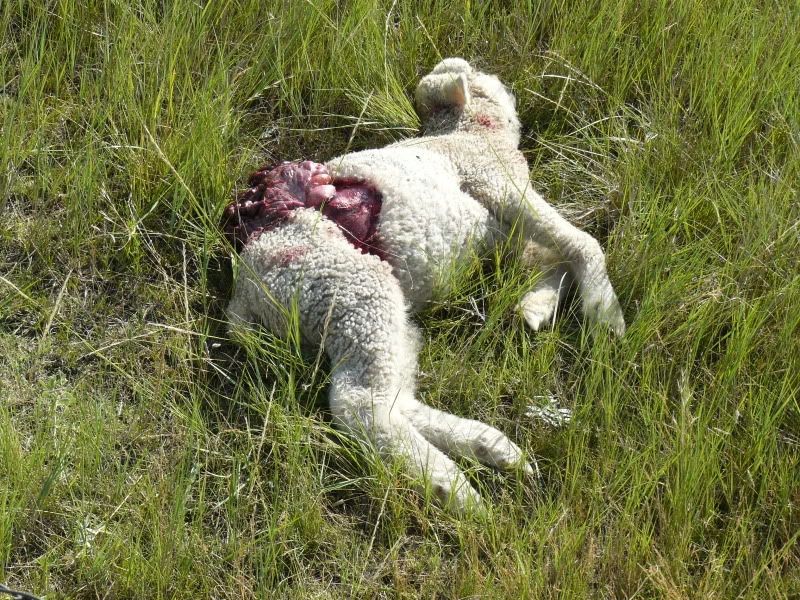
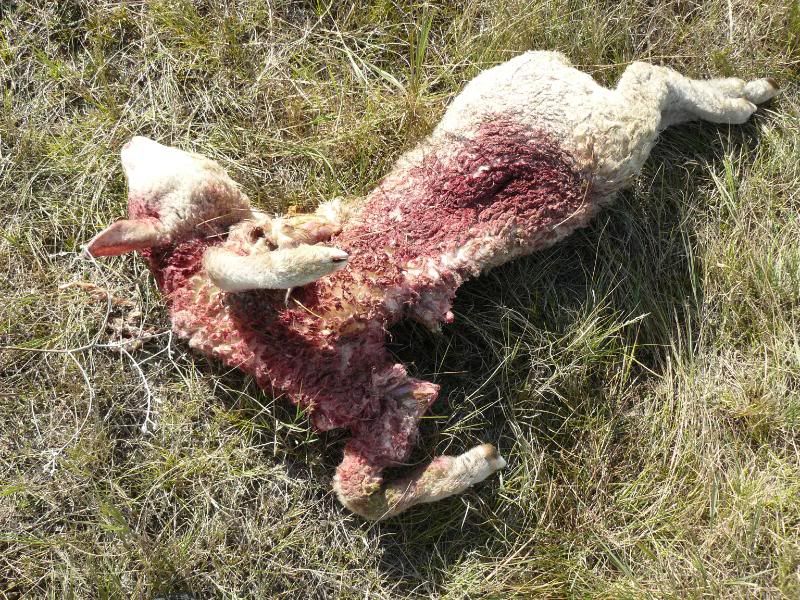
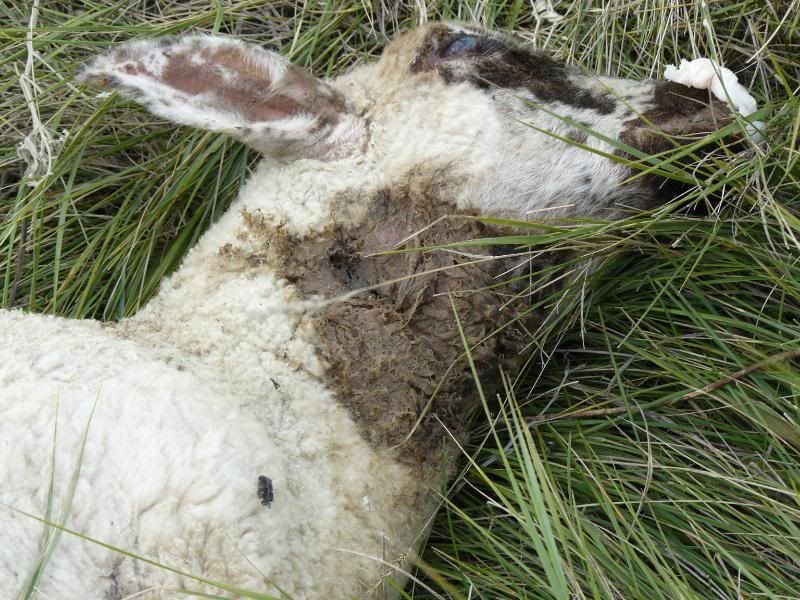
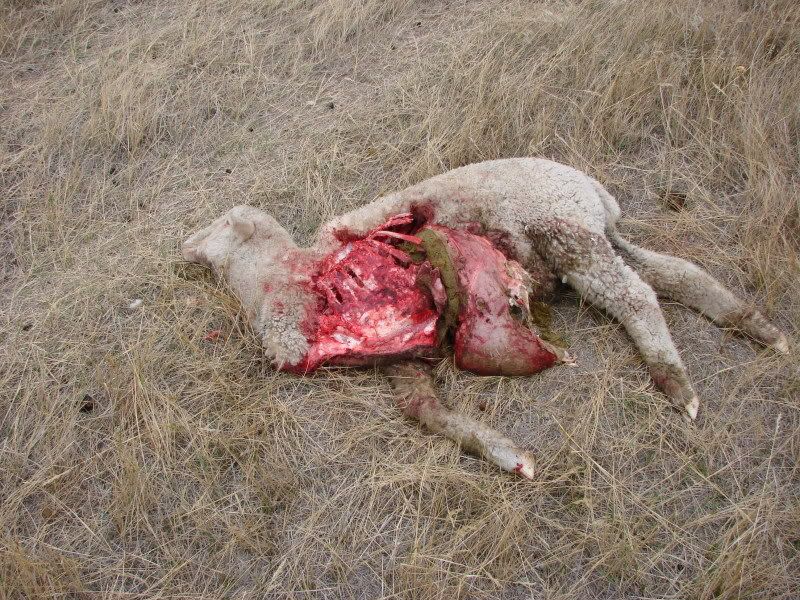
![[Linked Image]](8a3gq5-1.jpg)


