Bangor Daily News (ME)
Judge upholds trapping laws in lynx case
By Kevin Miller
November 12, 2009
http://www.bangordailynews.com/detail/129296.html AUGUSTA, Maine — A federal judge has rejected a case filed by two
animal welfare groups claiming that Maine’s recreational trapping
policies could cause irreparable harm to the state’s population of
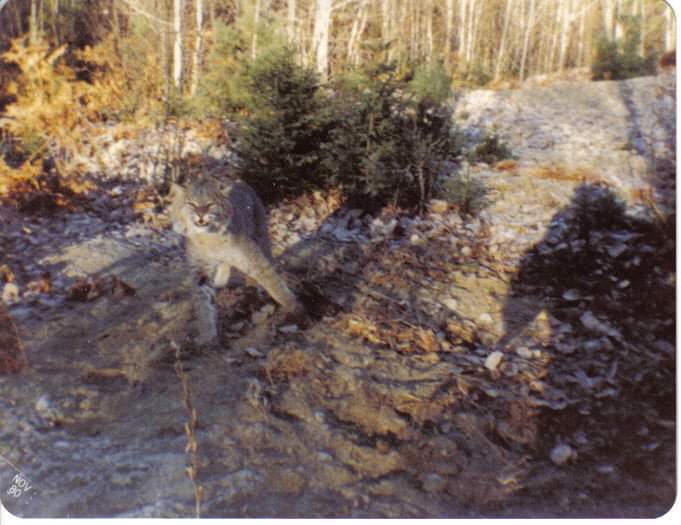
Canada lynx.
U.S. District Court Judge John Woodcock essentially upheld the current
trapping laws on the books in Maine after a lengthy court battle
focusing on whether the Department of Inland Fisheries and Wildlife
was doing enough to protect the lynx.
Two organizations, the Wildlife Alliance of Maine and the Animal
Welfare Institute, filed a lawsuit in August 2008 alleging that DIF&W
was violating the Endangered Species Act by authorizing trapping
practices that resulted in lynx being captured and sometimes killed.
The lawsuit, if successful, likely would have canceled the
fur-trapping season for most larger animals throughout northern Maine.
As a federally protected threatened species, lynx are prohibited from
being caught, harassed, injured or killed.
But in a 28-page ruling released Tuesday evening, Woodcock wrote that
the Animal Welfare Institute “has simply not proven its case” that
Maine’s trapping regulations pose a threat to the welfare of the
overall lynx population in the state.
“Moreover, even if the court found that some lynx suffer debilitating
injuries from being captured in leghold traps, it cannot take the next
step and conclude that those injuries represent a threat to the
species as a whole,” Woodcock wrote.
Woodcock did, however, agree that DIF&W remains liable under the
Endangered Species Act for trapped lynx. The state has applied for an
“incidental take permit” from federal officials that would protect
DIF&W for accidental trappings.
State officials and trappers said they were pleased with the ruling.
“Just because you accidentally trap and release a handful of lynx
every year, that doesn’t justify shutting down the whole trapping
season,” said Skip Trask, a trapper and lobbyist for the Maine
Trappers Association.
Daryl DeJoy with the Wildlife Alliance of Maine said he and the other
plaintiffs were reviewing the ruling and assessing their appeal
options. But DeJoy pointed out that three lynx already have been
caught in traps so far this year.
“Of course, those are just the reported takes,” DeJoy said.
DIF&W officials estimate that there are perhaps 1,000 or more lynx in
Maine, which is home to the only self-sustaining population of
medium-sized cats in the eastern U.S. But the plaintiffs question
those figures.
The lawsuit was the latest attempt by animal rights groups angered
over recurrent incidences of lynx being caught and even killed by
Maine trappers. An earlier lawsuit forced the state to change its
regulations, but more than a dozen lynx have subsequently been caught
in traps.
Although nearly all of the trappings appeared to be accidental, the
groups argued that DIF&W was at fault for allowing trapping techniques
that put lynx at risk of injury or death.
Sportsmen contend that the organizations were merely using the lynx as
a way to ban all trapping.
Since 1999, at least 47 lynx have been caught in traps in Maine,
including three since trapping began in October. The vast majority of
the cats, including two of the three this fall, were released alive.
However, state and federal agencies are investigating the case of a
lynx that was caught in a trap near Rangeley and subsequently shot and
killed by a bird hunter.
Expert witnesses appearing on the plaintiffs’ behalf pointed to
studies suggesting the padded traps used throughout Maine could cause
leg injuries that increased the likelihood of lynx starving or
becoming easier prey for predators.
But in his ruling, Woodcock wrote he found the plaintiff’s “generic
evidence and speculative inferences much less convincing than IF&W’s
specific records.” Woodcock also put much more stock in the testimony
offered by Kenneth Elowe, director resource management for DIF&W, than
in the plaintiffs’ witnesses.
“I was very pleased with the process the judge used,” Elowe said
Thursday. “He allowed extensive testimony … I think he did a good job
of really sorting out the complexities of the case.”
Although they lost the larger case, the Wildlife Alliance of Maine and
the Animal Welfare Institute claimed partial victories in the lawsuit.
Woodcock reiterated his earlier finding that DIF&W remains legally
liable for trapped lynx, although he did not agree the incidences rose
to the level of shutting down Maine’s trapping season.
Camilla Fox, wildlife consultant for the Animal Welfare Institute,
also pointed out that Woodcock ordered DIF&W to make additional
changes to its regulations involving body-gripper or killer-type traps
after two lynx were killed in such traps late last year.
Fox said that the department has not taken any steps on its own to
protect lynx since the species was listed on the Endangered Species
List in 2000.
“Every regulatory change implemented by IF&W to protect lynx has been
a direct result of litigation,” Fox said.




![[Linked Image]](http://i45.photobucket.com/albums/f51/Donnie1Mac2Leod3/200px-Clan_member_crest_badge_-_Clan_Macleodsvg.png)